← Back to catalog
RYA G14Power · beginner

Powerboat Level 2 - National Powerboat Certificate

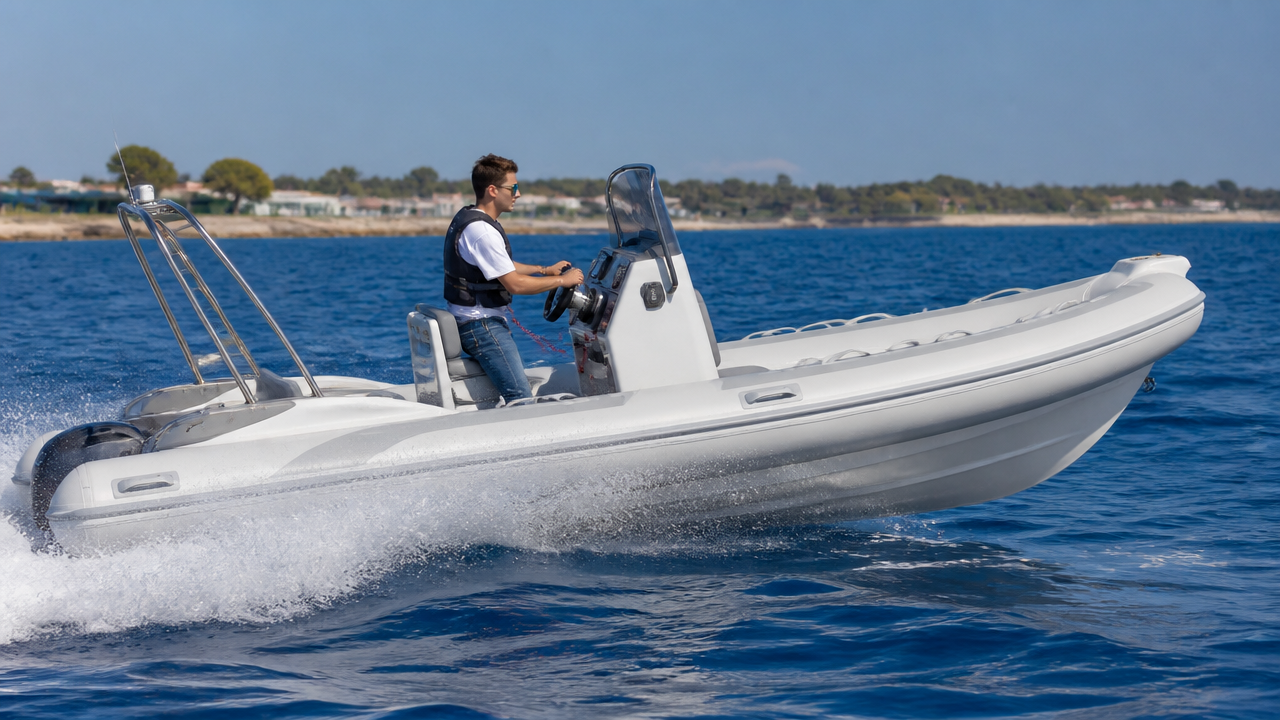
The most popular powerboat course. Two days covering boat handling, man overboard, and coastal passage-making at planing speeds.

Prerequisite Knowledge

Before you book

No prior experience required. This course is suitable for complete beginners.

Level · beginner

Where we run it

Available locations

  • Fornells, Menorca

    Menorca

  • RCMB, Barcelona

    Barcelona

See scheduled dates →

Enrollment

Enroll on Powerboat Level 2 - National Powerboat Certificate

Enrolling creates your course record so you can follow the syllabus, access course materials, track competencies and book practical sessions when dates suit you.

Delivered by Mt Sail & Power. Questions before you start? sail@mtsail.com

Course Content

What you'll cover

01

Introduction & Safety

3 lessonsOpen
Lessons (3)
  • Overview & learning objectives30 min
  • Key concepts60 min
  • Practical application90 min
02

Core Skills

3 lessonsOpen
Notes & self-check quiz
<!-- converted-slides -->

Slide notes

RYA Level 2 Powerboat Course
1. RYA Powerboat

RYA Level 2 Powerboat Course — slide 1

  • Level 2 Course
  • Duration: 2 days
2. Shorebased

RYA Level 2 Powerboat Course — slide 2

  • Lectures
  •  Types of Craft  VHF Procedures
  •  Engines & Drives  Position Fixing
  •  Ancillary and Safety  Tides/Tidal Streams
  • Equipment  Passage Planning
  •  Rules of the Road  Pilotage
  •  IALA Buoyage  CG66 Small Craft
  •  Weather Safety Scheme
  •  Chartwork
3. Practical

RYA Level 2 Powerboat Course — slide 3

  • Sessions
  •  Launch & Recovery (where possible)
  •  Boat Handling
  •  Securing to a buoy
  •  Anchoring
  •  Leaving & coming alongside
  •  Man Overboard Procedures
4. Types of Craft

RYA Level 2 Powerboat Course — slide 4

  • ► Displacement Craft
  •  Max Hull speed
  • governed by length
  •  Good directional
  • stability
  •  Rugged Construction
  • ► Engines & Drives
  •  Inboard
5. Types of Craft (cont)

RYA Level 2 Powerboat Course — slide 5

  • ► ‘V’ shaped Hulls
  •  Low initial stability at rest
  •  Good directional stability
  • at speed
  •  Buoyancy must be built in
  •  Deep ‘V’ soft ride @ speed
  •  Shallow ‘V’ hard ride @
  • speed.
  • ► Engines & drives
  •  Outboard
  •  Inboard with Outdrive
6. Types of Craft (cont)

RYA Level 2 Powerboat Course — slide 6

  • ► Dories & Cathedral
  • Hulls
  •  Good directional stability
  • at low speed
  •  Good Load carrying
  • capacity
  •  High stability, even at
  • rest
  •  Buoyancy built in
  • between skins
  •  Uncomfortable at high
  • speed in waves
  • ► Engine & Drives
  •  Outboard
  •  Inboard/Outdrive
7. Types of Craft (cont)

RYA Level 2 Powerboat Course — slide 7

  • ► Inflatables
  •  Portable
  •  High Stability
  •  Very high Buoyancy
  •  High Load capacity
  •  Wind affected
  •  Low directional stability
  •  Rough Wet ride @ speed
  •  Soft Contact
  •  Relatively short lived
  • ► Engines & Drives
  •  Outboard
8. Types of Craft (cont)

RYA Level 2 Powerboat Course — slide 8

  • ► Rigid Hull Inflatable
  • (RIB)
  •  Advantages of ‘V’ hull and
  • Inflatables
  •  Good directional stability
  •  High Buoyancy/load capacity
  •  Soft Contact
  •  Exceptional seaworthiness in
  • Bad weather
  • ► Engine & Drives
  •  Outboard
  •  Inboard/Outdrive
9. Engines & Drives

RYA Level 2 Powerboat Course — slide 9

  • ► Inboard Engine
  •  Permanent Installation
  •  Shaft exposed below
  • Hull
  •  Permanent fuel tanks
  • usually Diesel
  •  Drives propeller via
  • shaft
  •  Separate rudders
  •  Serviced in situ
10. Engines & Drives (cont)

RYA Level 2 Powerboat Course — slide 10

  • ► Outboard
  •  Easily Accessible
  •  Choice of shaft Length
  •  Can be tilted for
  • Beaching
  •  Removable for servicing
  •  Usually separate fuel
  • tanks
  •  Usually petrol (2 or 4
  • stroke)
  •  Engine acts as rudder
  •  Propeller speed affects
  • steering
11. Engines & Drives (cont)

RYA Level 2 Powerboat Course — slide 11

  • ► Outdrives
  •  Combined
  • characteristics of both
  • previous drives
  •  Usually reserved for
  • High power units
  •  Inboard engine at
  • transom
  •  Fixed fuel tanks
  •  Outdrive leg with
  • handling characteristics
  • of outboard
12. Safety Afloat

RYA Level 2 Powerboat Course — slide 12

  • ► Vessel Safety ► Personal Safety
  •  Engine Maintenance  Warm & Waterproof
  • Checks
  •  Pumps & Baling  Lifejackets
  • Equipment  Buoyancy Aids
  •  Basic Repair Toolkit  Crew Briefing
  •  Firefighting Equipment
  •  Man Overboard Procedure
  •  Lines/Warps
  •  Anchor  Shore based Contact
  •  Pyrotechnics
  •  Stowage
  •  Knowledge of operating
  • area
13. Ancillary and Safety Equipment

RYA Level 2 Powerboat Course — slide 13

  • ► Alternative propulsion
  •  Paddles
  •  Self-righting Equipment
  •  Pyrotechnics
  •  Fire Extinguisher
  •  First aid kit
  •  Spare Buoyancy aid/
  • lifejacket
14. Rules of the Road

RYA Level 2 Powerboat Course — slide 14

  • IRPCS rules
15. IRPCS rules Sound Signals

RYA Level 2 Powerboat Course — slide 15

16. IALA Buoyage

RYA Level 2 Powerboat Course — slide 16

17. Initial Assessment

RYA Level 2 Powerboat Course — slide 17

  • Weather to Go?
  • ► Main factors to consider:
  •  Wind strength
  •  Risk of Flash Flooding
  •  Increased Currents
  • ► To help you decide:
  •  Look out the window!
  •  Source a forecast
  • ► Coastguard
  • ► Radio
  • ► Newspaper
  • ► Television
  •  Survey local conditions
  • ► At launch site
  • ► Area of operation
18. Initial Assessment

RYA Level 2 Powerboat Course — slide 18

  • Forc Knots Description Sea State
  • e
  • 0 0-1 Calm Mirror
  • 1 1-3 Light Breeze Smooth
  • 2 4-6 Light Breeze Calm
  • 3 7-10 Gentle Breeze Few White Horses
  • 4 11-16 Moderate Breeze Small Waves
  • 5 17-21 Fresh Breeze Larger Waves
  • 6 22-27 Strong Breeze Rough
  • 7 28-33 Near Gale Very Rough
  • 8 34-40 Gale High Seas
  • 9 41-47 Strong Gale Severe Seas
  • 10 48-55 Storm Very Severe
  • 11 56-63 Violent Storm Extreme
  • Conditions
  • 12 64+ BeaufortHurricane
  • Wind Extreme
  • Scale Conditions
19. Initial Assessment

RYA Level 2 Powerboat Course — slide 19

  • Where to Launch?
  • ► Beach:
  •  Stay on hard standing
  •  May have to carry
  • equipment
  • ► Slipway:
  •  Ownership
  •  Other users
  •  Width
  •  Angle
  •  Condition of surface
  •  Extension of slipway
  • underwater.
20. Preparation

RYA Level 2 Powerboat Course — slide 20

  • ► Prior to approaching slip
  • Remove:
  •  Lightboard and cable
  •  Prop Bag
  •  Trailer Securing straps
  • ► Attach & secure:
  •  Engine
  •  Mooring warps
  •  Ancillary equipment
  •  Fuel lines/cans
  •  ‘Flash’ engine
21. Launch

RYA Level 2 Powerboat Course — slide 21

  •  Use of jockey wheel &
  • handbrake
  •  Use of line between
  • trailer & vehicle.
  •  Float boat off (don’t
  • push)
  •  Use of crew
  •  Heavy gear loaded after
  • launch
  •  Trailer parking
22. Recovery

RYA Level 2 Powerboat Course — slide 22

  •  Re-assessment of
  • conditions at slipway
  •  Correctly position trailer
  •  Correctly position boat
  • on trailer.
  •  Care in use of trailer
  • winch
  •  Move clear of slip
  •  Secure boat to trailer
  • using straps
  •  Fit prop bag and light
  • board.
23. Boat Handling Under way

RYA Level 2 Powerboat Course — slide 23

  • ► Awareness of
  • Others
  •  Effects of wash
  •  Pollution
24. Boat Handling Under way

RYA Level 2 Powerboat Course — slide 24

  • ► Loading
  •  Fore & aft trim
  •  Balance
  •  Manufacturers
  • guidelines
  •  Effect on performance &
  • fuel consumption
25. Boat Handling Under way

RYA Level 2 Powerboat Course — slide 25

  • ► Planing craft
  •  Always use kill cord!
26. Boat Handling Under way

RYA Level 2 Powerboat Course — slide 26

  • ► Slow Speed
  • Manoeuvres
27. Boat Handling Under way

RYA Level 2 Powerboat Course — slide 27

  • ► Coming Alongside
  •  Preparation
  •  Fenders
  •  Approach
  •  Escape route
  •  Communication
  • with crew
  •  Securing boat
28. Boat Handling Under way

RYA Level 2 Powerboat Course — slide 28

  • ► High Speed
  • Manoeuvres
  •  Crew safety &
  • Comfort
  •  Throttle control
  •  Warn crew of
  • Intentions
  •  ‘S’ & ’U’ Turns Risk of
  • Prop cavitation.
  •  Emergency stops
29. Securing to a Buoy

RYA Level 2 Powerboat Course — slide 29

  • ► Making Fast
  •  Preparation of lines
  •  Slow Controlled Approach
  •  Communicate with crew
  •  Plan escape route
  •  Pick up & secure to mooring
  • (not Pick up Buoy!)
  •  Use fairlead
  •  Prevent chafe
  • ► Departure
  •  Prepare to return line
  •  Ensure engines running well
  •  Clear propeller
30. Anchoring

RYA Level 2 Powerboat Course — slide 30

  • ► Types of Anchor
31. Anchoring

RYA Level 2 Powerboat Course — slide 31

  • ► Preparation
  •  Type of holding
  •  Check depth
  •  Estimate swinging
  • room required for
  • scope
  •  Flake enough warp
  • to reach bottom
  •  Remove anchor
  • from stowage
32. Anchoring

RYA Level 2 Powerboat Course — slide 32

  • ► Making fast
  •  Stop boat before
  • letting go
  •  Lay out warp to
  • estimated scope
  •  Confirm holding
  •  Check by transits
  •  Warp through fairlead
  • or roller to prevent
  • chafe
33. Anchoring

RYA Level 2 Powerboat Course — slide 33

  • ► Departure
  •  Engine running
  •  Trip anchor to
  • release if
  • necessary.
  •  Use of power to
  • take the weight off
  • anchor warp
34. Man Overboard

RYA Level 2 Powerboat Course — slide 34

  • ► Causes ► Advice to Man Overboard
  •  Crew not secure before  Shout as you go
  • moving off overboard
  •  Striking a hazard  Inflate lifejacket
  •  Travelling too fast  Keep calm!
  •  Rough conditions  Check yourself over
  •  Messing about  Don’t swim. Try and
  •  Sea sickness stay at your original
  • position of entry to the
  • water
35. Man Overboard

RYA Level 2 Powerboat Course — slide 35

  • ► Procedure
  •  Helmsman takes charge
  •  Detail crew member to
  • point constantly at MoB
  •  Slow Down
  •  Turn in a wide circle
  •  Check wind/tide
  • direction
  •  Approach slowly from
  • down wind/down tide
  •  Brief crew
  •  When contact is made
  • switch off engine
36. Man Overboard

RYA Level 2 Powerboat Course — slide 36

  • ► To assist recovery of
  • MoB consider:
  •  Assisting aboard by
  • crew.
  •  Rope strop
  •  Boarding ladder
  •  Deflating a section of
  • sponson, if necessary
  •  Aftercare
37. Disabled Craft

RYA Level 2 Powerboat Course — slide 37

  • ► Boat Adrift
  •  Toward safety or
  • Danger?
  •  Use Anchor if depth
  • permits
  •  Alternative propulsion
  • – effective?
  •  Control drift
  •  Rectify engine fault
  •  Self help before
  • seeking help
38. Disabled Craft

RYA Level 2 Powerboat Course — slide 38

  • ► Boat Damage ► Grounding
  •  Alter heel to bring  Prevention better than
  • damage above cure
  • waterline  Be aware of
  • surroundings
  •  Plug leaks
  •  Reverse off
  •  Bailing under way
  •  Change trim, lighten
  • boat
  •  Use paddles to push off
  •  Check for damage
39. Disabled Craft

RYA Level 2 Powerboat Course — slide 39

  • ► Towing:
  •  Side tow if possible
  •  Slow speed
  •  Secure towline - use bridle
  •  Agree signals between
  • vessels
  •  Problems manoeuvring in
  • confined areas
  •  Cast off tow if necessary
  • ► Being Towed:
  •  Use own line, agree terms
  •  Secure towline, agree
  • signals
  •  Tilt engine & trim boat
40. The End

RYA Level 2 Powerboat Course — slide 40

Lessons (3)
  • Overview & learning objectives30 min
  • Key concepts60 min
  • Practical application90 min
03

Assessment & Certification

3 lessonsOpen
Lessons (3)
  • Overview & learning objectives30 min
  • Key concepts60 min
  • Practical application90 min

RYA Syllabus

Learning outcomes

01

Launching and Recovery

1 outcomes
Trailer & slipway1
  • 1.1Prepares boat and trailer; launches and recovers competently
02

Boat Handling

2 outcomes
Manoeuvring at slow & planing speed2
  • 2.1Handles boat at slow speed in a marina
  • 2.2Drives on the plane and understands trim
03

Securing to a Buoy

1 outcomes
Mooring1
  • 3.1Picks up a mooring buoy under control
04

Anchoring

1 outcomes
Ground tackle1
  • 4.1Selects anchorage and anchors safely
05

Leaving and Coming Alongside

1 outcomes
Berthing1
  • 5.1Leaves and comes alongside in various wind and tide conditions
06

Man Overboard

1 outcomes
MOB recovery1
  • 6.1Recovers a man overboard under power
07

Collision Regulations

1 outcomes
IRPCS basics1
  • 7.1Applies collision regulations relevant to powerboats

Upcoming Sessions

Book your place

No sessions are currently scheduled. Contact us at sail@mtsail.com to request one.